Key Takeaways
- Industrial fire alarm systems require addressable architecture, environmental resistance, and integration with suppression systems that standard commercial systems do not provide.
- High-bay areas, hazardous materials, and shifting facility layouts create detection challenges that need to be designed for specifically.
- False alarms are an underestimated operational risk in industrial settings, creating alarm fatigue and production disruption over time.
- NFPA 72 compliance requires ongoing inspection and documentation. Missing records can trigger violations even when the system is functioning correctly.
- OSHA fines for fire protection violations reach up to $16,131 per serious violation and $161,323 for willful or repeat violations.
The Stakes Are Higher in Industrial Fire Protection
A standard commercial fire alarm system is not built for an industrial facility. High ceilings, heavy machinery, hazardous materials, and around-the-clock operations create detection challenges that general-purpose systems cannot reliably handle. For safety and compliance managers, the wrong system does not just create a compliance gap — it creates real liability and operational risk.
Why Industrial Facilities Are a Different Risk Category
Industrial buildings carry a disproportionate share of serious fire risk compared to other commercial property types. According to the National Fire Protection Association, manufacturing and industrial properties account for billions of dollars in property damage annually, with fires in these environments more likely to cause injuries, fatalities, and extended shutdowns than fires elsewhere.
The physical environment is a big part of why. Warehouses with ceiling heights above 30 feet create detection dead zones that standard smoke detectors cannot cover. Facilities handling flammable liquids, combustible dust, or pressurized gases need detection technology built for those specific hazards, not adapted from it.
Regulatory exposure adds real pressure on top of that. OSHA's 29 CFR 1910.164 sets specific requirements for industrial detection systems, covering sensor placement, maintenance, and employee notification. OSHA issued over 1,500 fire protection citations in fiscal year 2023. That is an active enforcement area, not a theoretical one.
Beyond OSHA, industrial facilities also need to satisfy NFPA 72, local Authority Having Jurisdiction (AHJ) requirements, and in some cases insurance carrier standards that go further than the regulatory baseline.
Key System Features Safety Managers Should Require
When evaluating systems, look past basic UL listing and focus on what industrial environments actually demand.
Addressable architecture is the starting point. Conventional systems tell you which zone triggered. Addressable systems tell you exactly which device. In a large manufacturing plant, that distinction can be the difference between a targeted response and a full facility evacuation that costs hours of production.
Environmental resistance is just as important. Industrial settings expose equipment to temperature swings, humidity, dust, vibration, and chemical exposure. Detectors rated for these conditions maintain accuracy where standard devices would generate false alarms or fail silently.
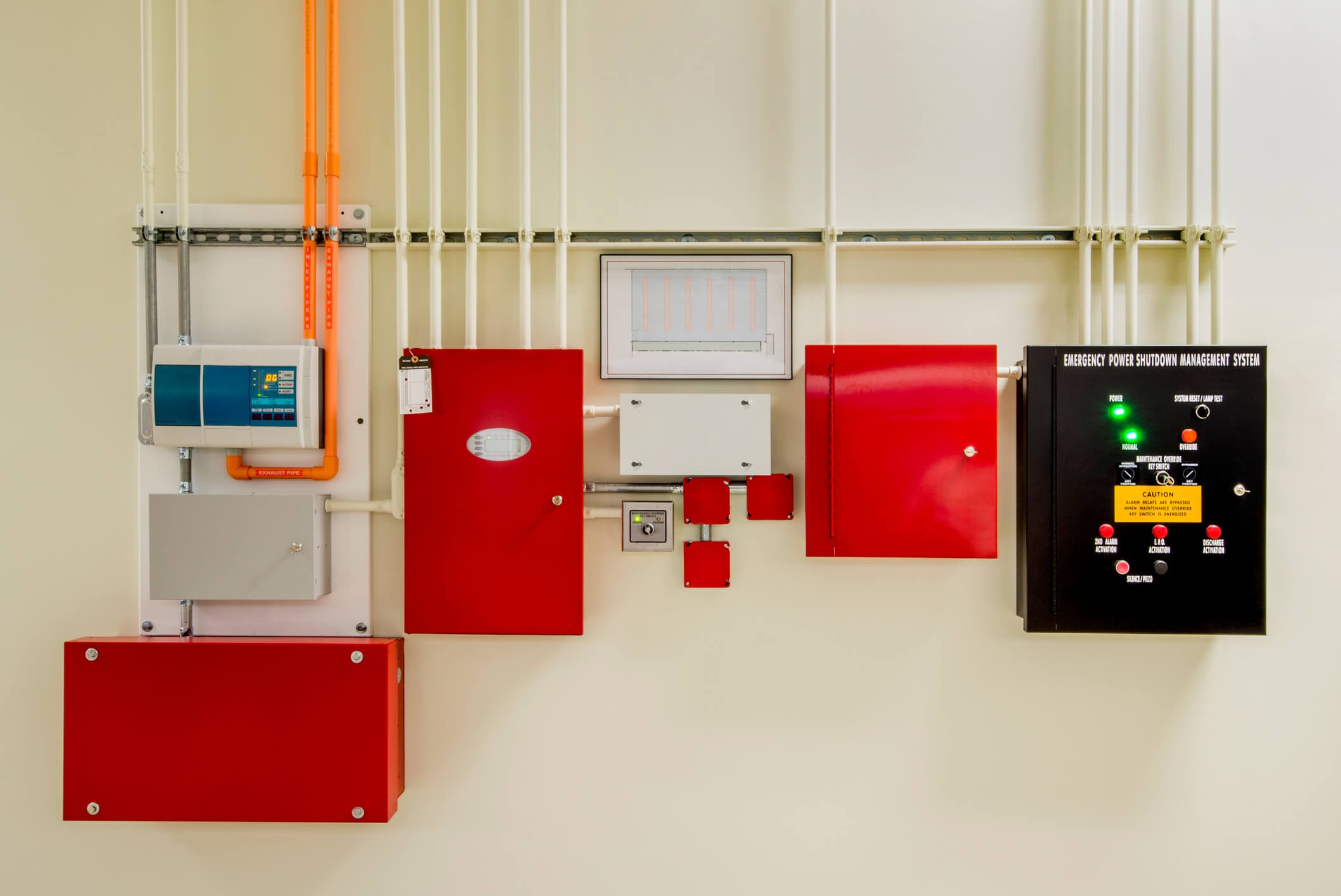
Integration with suppression and process control systems is what makes a fire alarm system genuinely useful in an industrial context. The alarm needs to communicate with suppression controls and, in some facilities, trigger equipment shutdown protocols before a fire can spread further.
Impact Fire's fire alarm services are designed to meet these requirements across industrial environments, from light manufacturing to chemical processing facilities.
Navigating Facility Operational Complexity
Industrial facilities change. Production lines shift, storage areas get reconfigured, and new equipment comes in. A system that was designed correctly at installation can develop real coverage gaps as the facility evolves around it.
Multi-zone detection matters when a facility has distinct hazard areas. A welding operation and a chemical storage room carry different ignition risks and need detection logic that reflects that difference. High-bay areas are their own challenge. Heat and smoke stratify at elevation before descending to detector level, which delays activation. Beam smoke detectors and aspirating systems are designed specifically for this problem.
False alarms deserve more attention than they usually get during system selection. Dust, steam, and temperature fluctuations in industrial settings can trigger conventional detectors repeatedly. Each false alarm pulls people off the floor and disrupts production. Over time, it builds alarm fatigue, and workers start treating real alarms the same way they treat the false ones. According to the U.S. Fire Administration, false alarms account for a significant share of all fire department responses nationally, and industrial facilities are a notable contributor.
Compliance, Inspections, and Documentation
Getting the system installed correctly is the beginning, not the end. NFPA 72 requires fire alarm systems to be inspected, tested, and maintained on a defined schedule, with records available to the AHJ on request. The compliance relationship with your fire protection provider does not stop at commissioning.
Different components carry different testing intervals. Smoke detectors, pull stations, notification appliances, and control panels each have their own requirements under NFPA 72. A missed test or a documentation gap can result in a violation even when the system itself is working fine.
The financial exposure is concrete. OSHA fines for serious violations currently reach $16,131 per violation. Willful or repeat violations reach $161,323. A facility that experiences a fire while out of compliance faces additional exposure through insurance claims and litigation on top of that.
Working with a provider that understands both the technical requirements and the documentation standards for your industry takes a significant burden off your plate. Impact Fire's inspection and preventative maintenance services are built to keep industrial facilities current with NFPA 72 and AHJ expectations.
Choosing the Right Fire Alarm Partner for Industrial Sites
The system matters. The provider behind it matters just as much.
Experience with similar facilities is more valuable than general fire protection credentials. A provider that primarily serves office buildings or retail centers may not have the design background for high-bay warehouses, hazardous material storage, or continuous process environments. It is worth asking directly about their work in facilities that look like yours.
Design capability is a genuine differentiator. A qualified provider should be able to assess your facility, identify coverage gaps, and produce a design based on your actual hazard profile. NFPA 72 requires system design to account for building use, occupancy, and environmental conditions as a foundational compliance requirement — not an optional upgrade.
Ongoing service capacity rounds it out. Industrial fire alarm systems need periodic inspection, testing, and reconfiguration as the facility changes. A provider with local presence and dedicated service teams is better positioned to keep up with that than one managing service calls from a centralized dispatch model.
Work With a Fire Alarm Partner Who Understands Industrial Facilities
Industrial fire alarm systems are not a commodity purchase. The environment is complex, the compliance requirements are serious, and the consequences of system failure are significant. The right system, correctly designed and consistently maintained, is one of the most valuable safety investments a compliance manager can make.
Impact Fire works with industrial facilities across the country to design, install, inspect, and maintain fire alarm systems built for real operating conditions. If your current system has not been evaluated against your facility's current layout and hazard profile, that is a good place to start.
Contact the fire safety experts at Impact Fire to schedule a site assessment for your industrial facility.