What Are AHJ Requirements for Commercial Buildings?
AHJ (authority having jurisdiction) requirements are the fire and life safety codes enforced by the local official, agency, or entity with legal authority over your building. These requirements govern fire alarm systems, sprinklers, suppression equipment, emergency lighting, fire extinguishers, and the documentation that proves all of it has been properly maintained.
Because each state and municipality can adopt different code editions and local amendments, AHJ requirements vary by location, which means a multi-site facilities director may be managing compliance against several different regulatory frameworks at once.
Key Takeaways
- The AHJ is not a single entity. Depending on your location and occupancy type, you may be subject to multiple authorities simultaneously, including fire marshals, building officials, insurance representatives, and state agencies, each with jurisdiction over different aspects of your fire protection systems.
- There is no single national fire code. Each state selects which model code to adopt, which edition to enforce, and what local amendments apply, meaning two properties in neighboring markets may operate under meaningfully different requirements.
- An AHJ inspection can be triggered by more than the annual cycle. Renovations, permit pulls, change-of-use events, and even tenant complaints can all initiate a compliance review outside your normal schedule.
- Documentation failures are as consequential as physical deficiencies. Missing, incomplete, or inaccessible inspection records are a standalone violation under NFPA 72 and NFPA 10, and a liability exposure point in the event of an incident.
- Deferred repairs compound risk. Once a deficiency is identified during an inspection, the correction window is fixed. Multi-site facilities directors need a clear triage and resolution workflow to prevent deficiency backlogs from building across their portfolio.
If you manage fire and life safety systems across multiple commercial locations, you already know that compliance is not a one-time event.
AHJ requirements—the rules set and enforced by the authority having jurisdiction—can differ significantly from one city to the next, and what satisfies an inspector in one market may not hold up in another.
For facilities directors overseeing several properties, that inconsistency is one of the most persistent compliance challenges on the job.
What Is an AHJ and What Do Their Code Requirements Cover?
An authority having jurisdiction (AHJ) is the entity responsible for approving fire safety equipment, materials, installations, or procedures for a specified region.
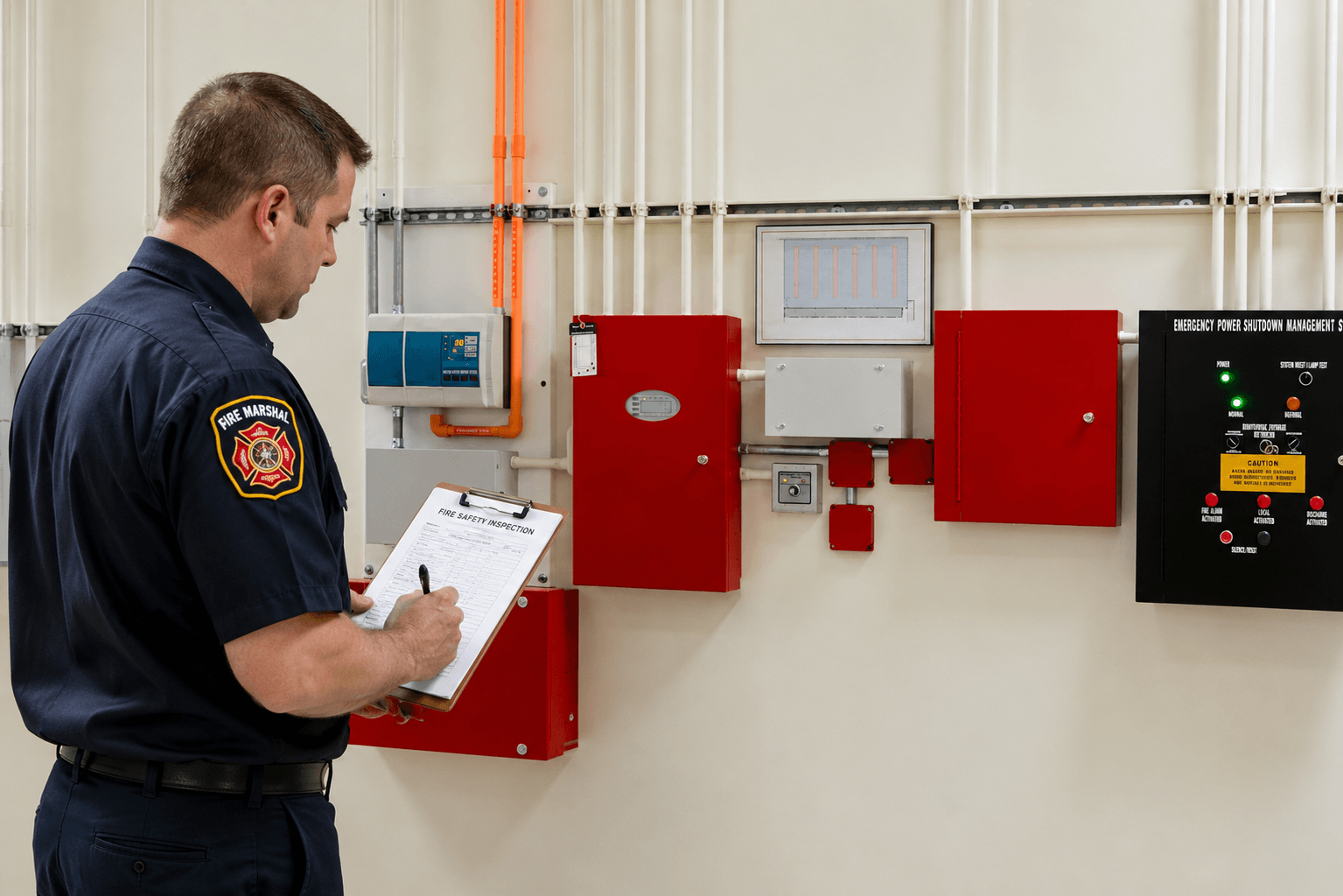
Many different people and organizations can serve as AHJs, and your facility may be subject to the authority of multiple AHJs simultaneously. Depending on your location and occupancy type, you might deal with a local fire marshal, a building official, a state fire prevention bureau, a health department representative, or even an insurance inspection body, each with its own scope of authority.
What the AHJ actually governs spans nearly every component of your building's fire and life safety infrastructure. Their code requirements typically address:
- Fire alarm systems and signaling equipment
- Fire sprinkler systems and standpipes
- Fire suppression systems
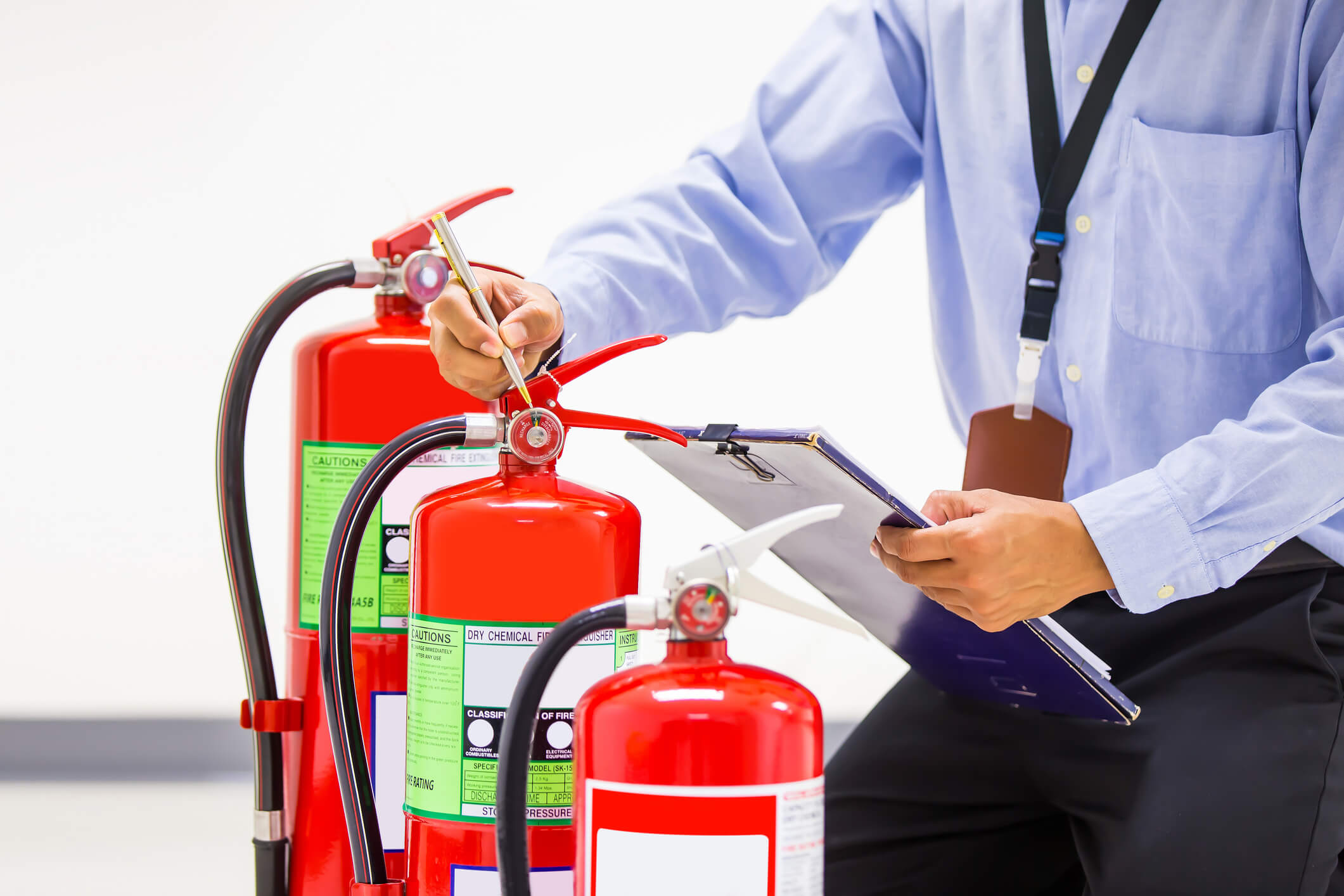
- Portable fire extinguishers
- Emergency and exit lighting
- Fire pumps
- Passive fire protection elements such as fire doors and dampers, and the documentation required to demonstrate that all of it has been properly inspected and maintained.
Without the authority having jurisdiction, the NFPA fire and safety codes are just voluntary standards. When NFPA codes are adopted by a jurisdiction, they become law, and those restrictions and regulations must be followed by the building owner.
Why Local AHJ Requirements Vary Across Jurisdictions
One of the more complicated realities of managing compliance across multiple properties is that AHJ code requirements are not uniform nationwide. Each of the 50 states chooses which model code to adopt, which edition to enforce, and what state-specific amendments to layer on top.
The edition gap creates additional complexity. NFPA standards are updated on a three-to-five-year revision cycle, but states do not always adopt the latest edition immediately. Some jurisdictions may be enforcing the 2018 or 2021 edition while the 2024 edition is already published. That means two of your properties in neighboring states could be operating under meaningfully different code versions at the same time.
Local amendments compound this further. Even within a single state, municipalities and counties can layer their own requirements on top of the state-adopted code. Sprinkler coverage thresholds, alarm notification requirements, inspection frequencies, and equipment approval standards can all be modified at the local level. A facilities director overseeing properties in several markets may effectively be managing compliance against several different regulatory frameworks simultaneously.
This is precisely why working with a fire protection partner who has inspection and preventative maintenance programs designed around local code knowledge (not just national standards) makes a practical difference.
Common AHJ Compliance Failures and How to Avoid Them
For facilities directors managing multiple locations, the failures below are the ones most likely to surface during an inspection, and the ones most preventable with the right systems in place.
Documentation Gaps
Documentation gaps are the most pervasive issue. Failing to document inspections, maintenance, and system tests is a violation in itself. In the event of an incident or audit, these records are critical for proving compliance and maintaining insurance coverage.
This is not a technicality. The AHJ expects records to be current, complete, and accessible on-site.
NFPA 72 requires detailed records for every inspection and test, including device-level results. For large buildings with hundreds of devices, paper-based tracking becomes impractical and error-prone.
NFPA 10 similarly requires documentation of annual maintenance inspections, six-year internal examinations, and twelve-year hydrostatic tests for portable fire extinguishers. Managing this across multiple properties manually creates real risk of gaps.
Irregular Inspections
Missed or lapsed inspection windows catch many facilities teams off guard, particularly when a property changes hands, a vendor relationship ends, or a system modification resets a compliance clock.
A failed inspection typically results in a notice of violation from the AHJ requiring corrective action within a specified timeframe. Uncorrected violations can lead to fines, increased liability exposure, and in severe cases, a stop-work order or occupancy restriction. The most common causes of failed inspections—documentation gaps, obstructed detectors, and inadequate testing records—are preventable with a proactive maintenance program.
Unpermitted System Modifications
When tenant improvements, equipment upgrades, or layout changes affect fire protection systems, those changes need to go through the AHJ's plan review and permitting process.
Work done without permits may require full removal and reinstallation to pass inspection, along with back-fees and re-inspection costs.
Obstructed Access Points
Obstructed access points and equipment clearance violations are straightforward but frequently cited.
For example, sprinkler heads require a minimum clearance below them to ensure proper water distribution. Fire department connections must remain accessible and clearly marked. Vehicles, storage materials, and other obstructions blocking fire department connections or access points are violations that increase firefighter response time and slow rescue operations.
In a multi-tenant commercial building, controlling what tenants store and where is an ongoing management challenge.
Deferred Equipment Repairs
Deferred repairs on identified deficiencies are a particularly high-risk pattern for multi-site operations. When an inspection identifies a deficiency, the clock starts immediately. If an inspection reveals deficiencies such as corroded heads or malfunctioning alarms, delaying repairs could lead to system failure and non-compliance.
Facilities directors overseeing multiple properties need a clear workflow for triaging and resolving deficiencies across locations, not a backlog that grows from one inspection cycle to the next.
The most effective way to stay ahead of these failure points is to treat AHJ compliance as an ongoing program rather than an event-driven task. That means standardized inspection schedules for each property tied to local AHJ requirements, centralized recordkeeping that survives vendor transitions, and a service partner who can maintain consistency across markets.
Work With a Partner Who Knows Your AHJ
AHJ requirements are not going to simplify. Code editions will continue to update, local amendments will continue to layer, and the documentation burden on facilities teams will only grow.
The facilities directors who manage this most effectively are not doing it alone. They have a fire protection partner with deep local presence, licensed technicians, and the systems to keep compliance from becoming a reactive scramble.
Contact Impact Fire to find out how we can help keep every property on your portfolio inspection-ready.