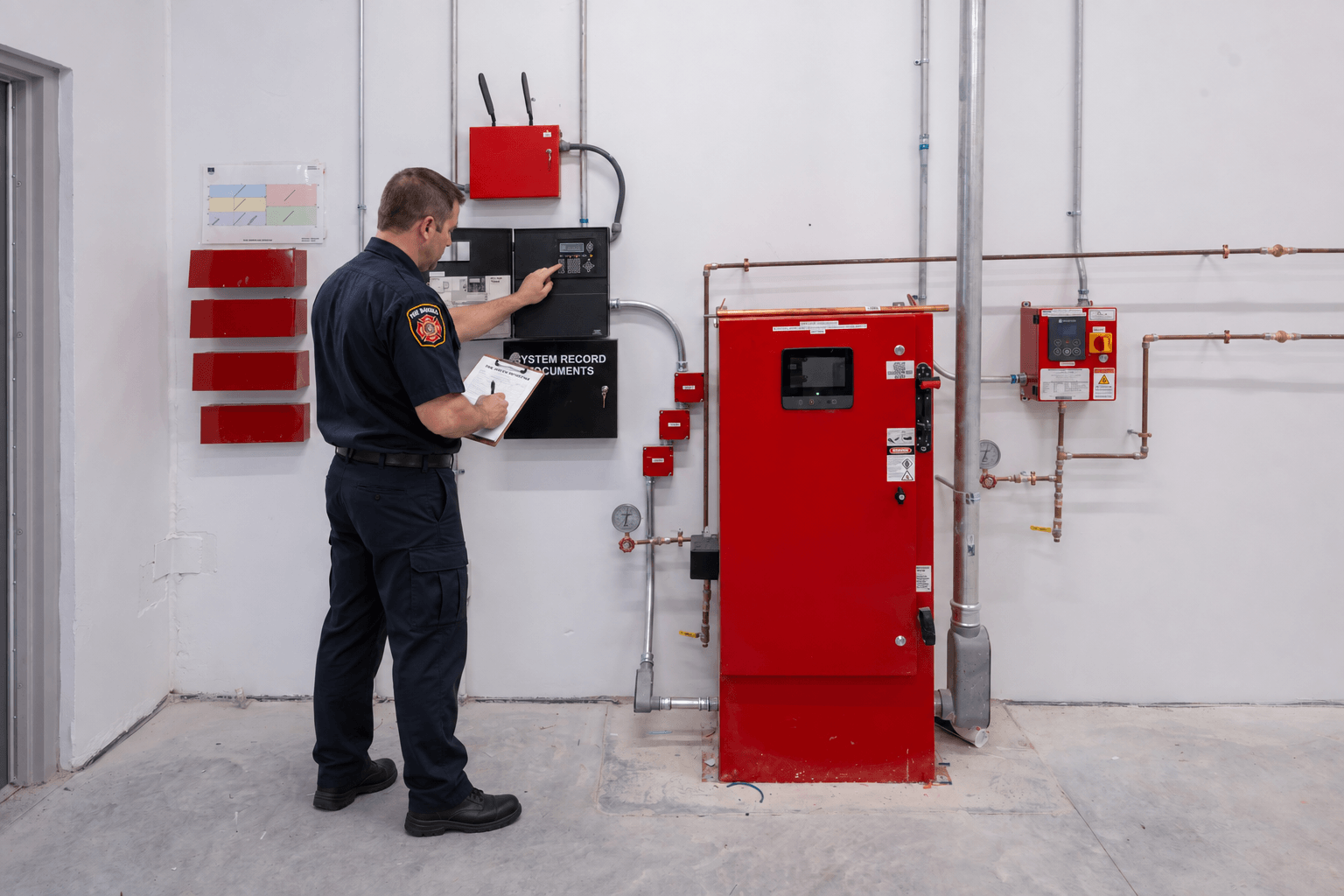
Top Fire Alarm Compliance Failure Points
Most fire alarm compliance failures trace back to one of these gaps rather than a hardware malfunction: incomplete or missing test documentation, functional testing performed by unqualified personnel, a lapsed annual test despite passing monthly visual checks, and multi-building portfolios operating under inconsistent code editions across sites.Key Takeaways
- Fire alarm compliance is a documentation and qualified-personnel discipline as much as an equipment discipline, and most failed inspections trace back to one of those two gaps.
- NFPA 72 treats inspection, testing, and maintenance as three distinct obligations with different frequencies. Passing a visual check does not mean the annual functional test is current.
- OSHA penalties for fire detection deficiencies reached $16,550 per serious violation and $165,514 per willful or repeated violation as of January 2025, a direct financial argument for documented compliance.
- School districts face a compliance challenge single-site commercial buildings do not: multiple campuses, multiple code editions, and instructional-hour scheduling constraints.
- Verifying technician qualifications before signing a service contract closes a compliance gap that is otherwise easy to overlook until a failed inspection surfaces it.
A fire alarm system can be fully installed, fully powered, and still fail its next inspection. Most fire alarm compliance failures are not equipment failures. They are gaps in testing intervals, missing documentation, or work performed by someone not qualified to sign off on it. For a safety and compliance manager overseeing school buildings, that distinction determines whether an inspection ends in a clean report or a corrective action notice.
What the Data Says About Fire Risk in Educational Buildings
Between 2014 and 2018, U.S. fire departments responded to an estimated average of 3,230 structure fires in schools each year, causing an annual average of one civilian death, 39 injuries, and $37 million in direct property damage, according to structure fire research published by the National Fire Protection Association. This is the most recent period NFPA has published a dedicated school fire dataset for, so the figures reflect NFPA's latest formal analysis rather than year-over-year current data.
The compliance stakes are more current and concrete. OSHA's penalty schedule confirms a maximum penalty of $16,550 per serious violation as of January 15, 2025, and $165,514 per willful or repeated violation, figures that apply directly to documented fire detection and life safety deficiencies, not just general workplace hazards.
Inspection, Testing, and Maintenance Are Three Separate Obligations
Compliance managers often use these terms interchangeably, but fire alarm systems are governed by NFPA 72, the National Fire Alarm and Signaling Code, which covers installation, inspection, testing, and maintenance as separately defined activities, with a dedicated chapter devoted to inspection, testing, and maintenance requirements.
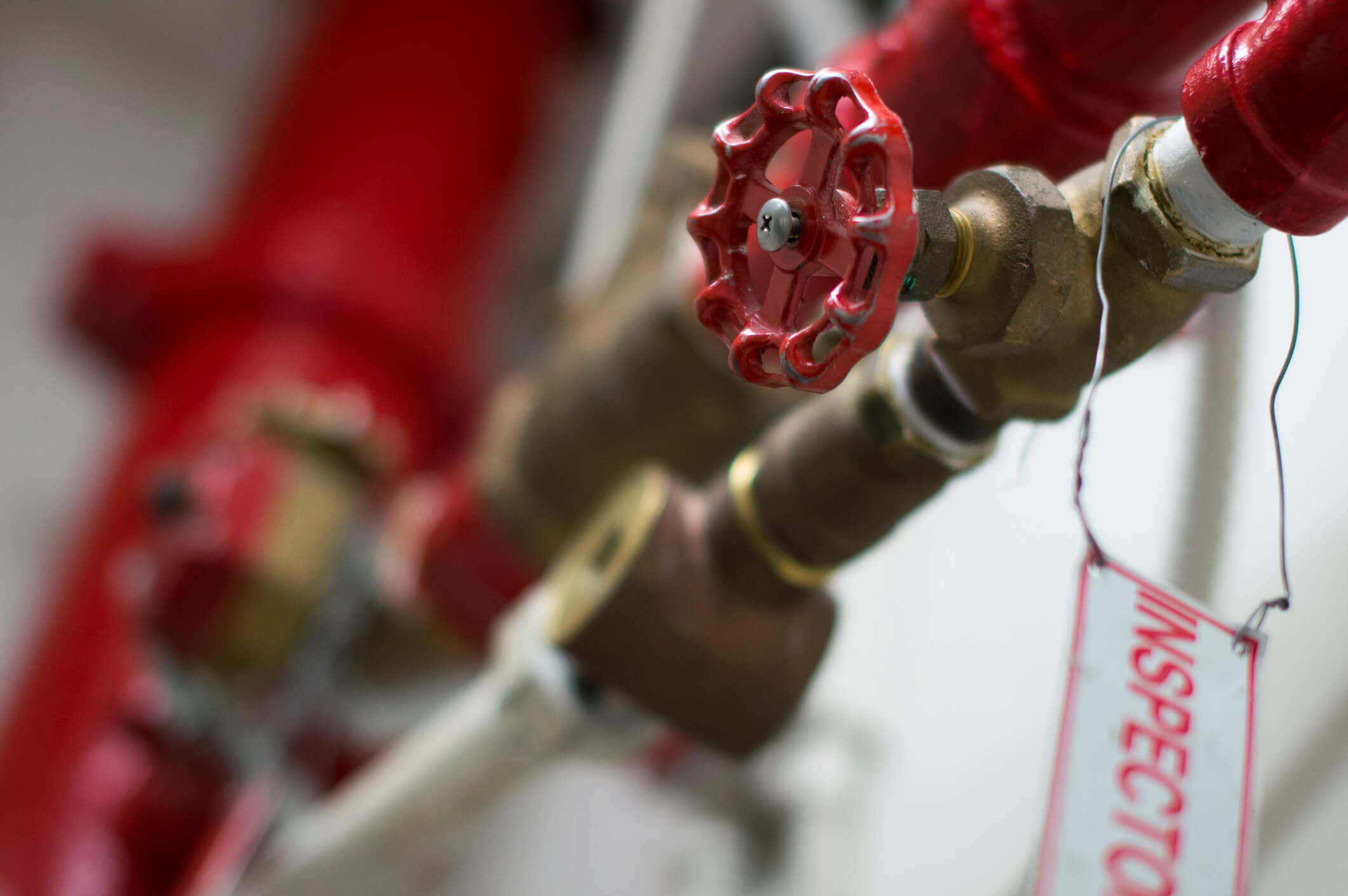
Inspection is a visual check: a technician confirms devices are in place, unobstructed, and undamaged, without activating anything. Testing goes further, deliberately triggering pull stations and detectors to confirm the full signal path reaches the monitoring station. Maintenance follows a failed test or a scheduled preventive task, such as battery replacement, and restores the system to full function.
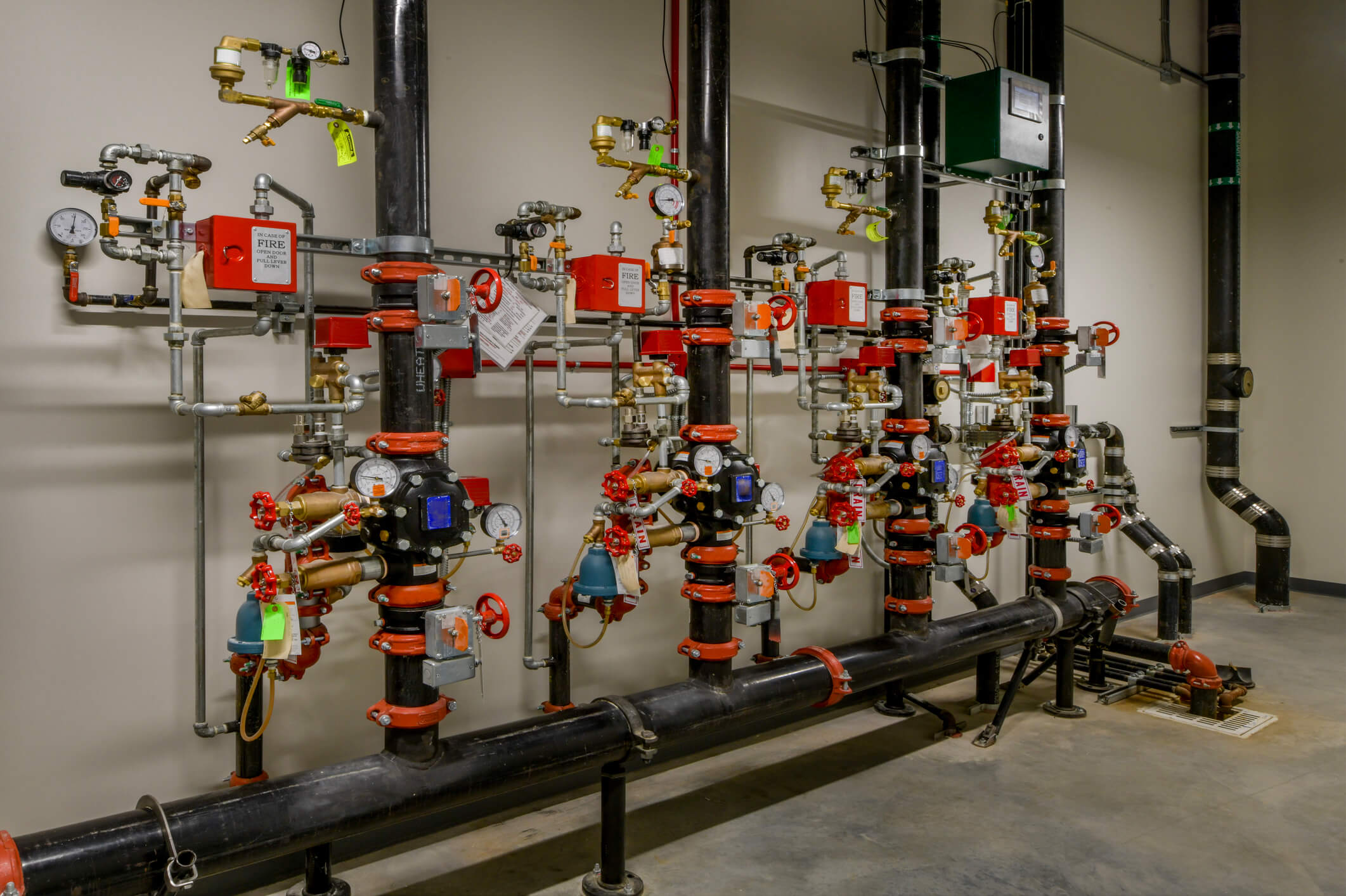
A campus can pass every routine visual check and still fail compliance if the comprehensive functional test has lapsed, because a visual check alone does not confirm the system will perform in an actual fire event. Working with a partner who understands the full scope of fire alarm systems removes the guesswork of which obligation applies to which task, and on what schedule.
Where Compliance Programs Break Down
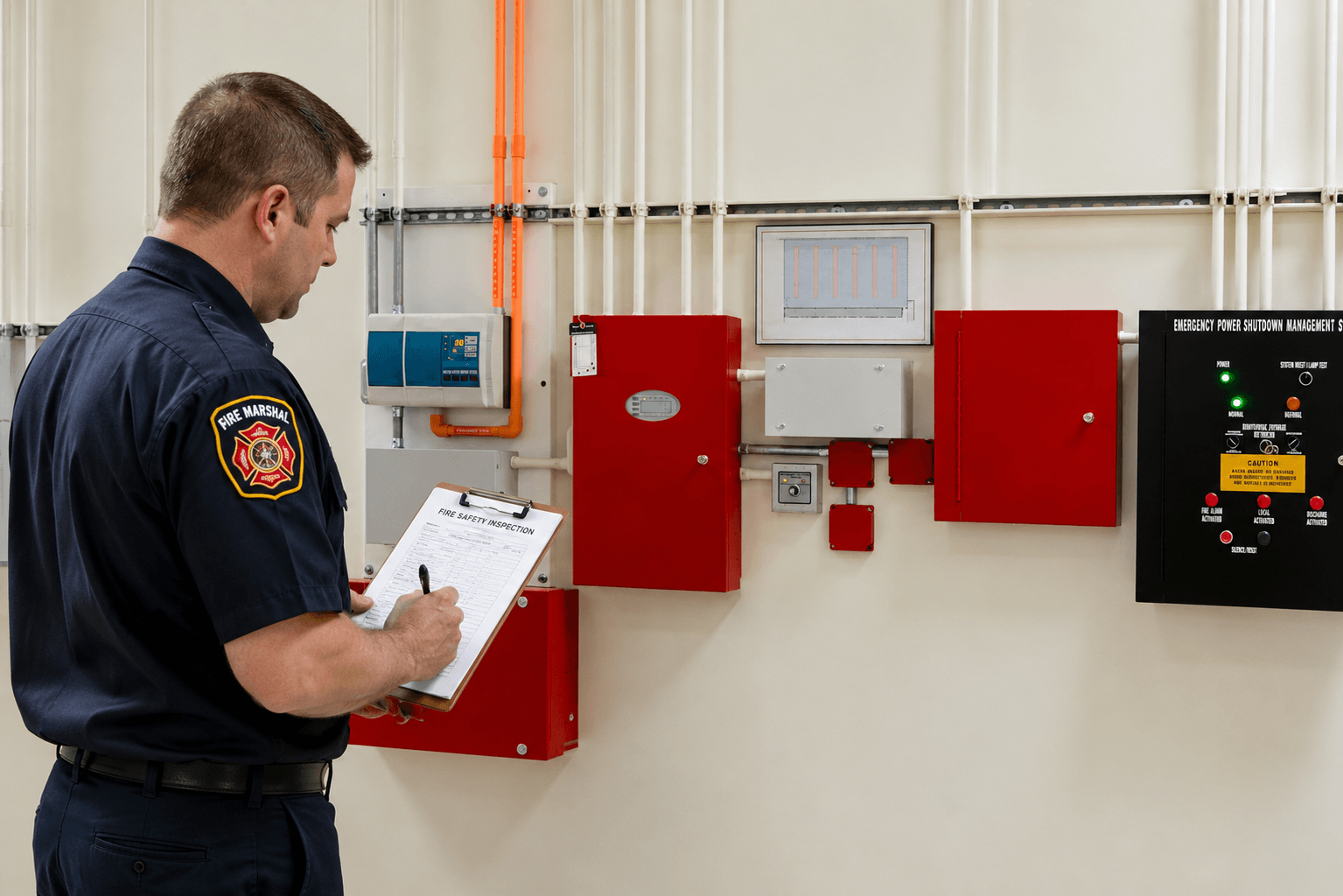
NFPA 72 organizes fire alarm requirements into distinct chapters, and two of them account for most failed inspections: Chapter 7 governs documentation, and Chapter 14 governs inspection, testing, and maintenance. A system can be fully functional and still be cited if the paperwork proving that functionality does not exist or is incomplete.
The qualified-personnel requirement compounds this. Under federal regulation, OSHA's technician standard requires that servicing, maintenance, and testing of fire detection systems be performed by a trained person knowledgeable in the system's operation, not by general facilities staff working from a checklist. A campus that assigns functional testing to an in-house maintenance team without the right credentials has a compliance gap regardless of how carefully the work was done.
This is why a strong compliance program treats documentation and technician qualification as first-order requirements, not paperwork to backfill after the fact. A preventative maintenance program built around NFPA 72's chapter structure closes both gaps at once: every device is tested by a qualified technician, and every test produces the documentation an AHJ or insurance carrier will ask for.
Why The Education Sector Faces A Different Compliance Challenge
A safety and compliance manager overseeing school buildings is rarely managing one system. Most districts operate multiple campuses, each potentially built in a different decade, under a different code edition, and inspected by a different local AHJ. NFPA 72 itself is revised on a three-year cycle, and which edition applies depends entirely on what the jurisdiction has adopted, which means two buildings in the same district can be held to two different sets of requirements.
Scheduling adds a second layer of difficulty that a single-site commercial building does not face. Annual functional testing requires activating alarms and pull stations, which is disruptive during instructional hours and difficult to coordinate around a fixed academic calendar. Deferring testing to avoid disruption is one of the more common ways a documentation gap opens in the first place.
Districts managing this complexity across campuses benefit from a partner already established in education-sector service, since a provider familiar with school scheduling constraints and multi-building portfolios can plan testing around the calendar rather than working around it after a missed window becomes a compliance finding.
Building A Defensible Compliance Program
The strongest compliance programs treat records as the deliverable, not the byproduct. A documentation system that logs every device, every test result, and every corrective action gives a safety and compliance manager something to hand an AHJ or an insurance adjuster on request, rather than something to reconstruct under deadline.
Vendor qualification matters just as much as the schedule itself. OSHA's technician standard places the burden on the employer to confirm that whoever services the system is actually qualified to do so, which means a compliance program should verify credentials before a contract is signed, not after a failed test raises the question.
The cost of getting this wrong is quantifiable and current. OSHA's penalty schedule puts a single serious violation at up to $16,550, and a willful or repeated violation at up to $165,514, figures that apply directly to undocumented or improperly performed fire detection maintenance. Against that exposure, a documented, professionally maintained program is the lower-cost path by a wide margin.
Fire Alarm Compliance in Commercial Buildings: The Takeaway
Fire alarm compliance in commercial buildings comes down to documentation, qualified technicians, and a testing schedule that matches NFPA 72's requirements, not just a working system. For school buildings managing multiple campuses and code editions, that discipline is what keeps an inspection routine instead of a liability. Contact Impact Fire to build a compliance program suited to your district's buildings and schedule.