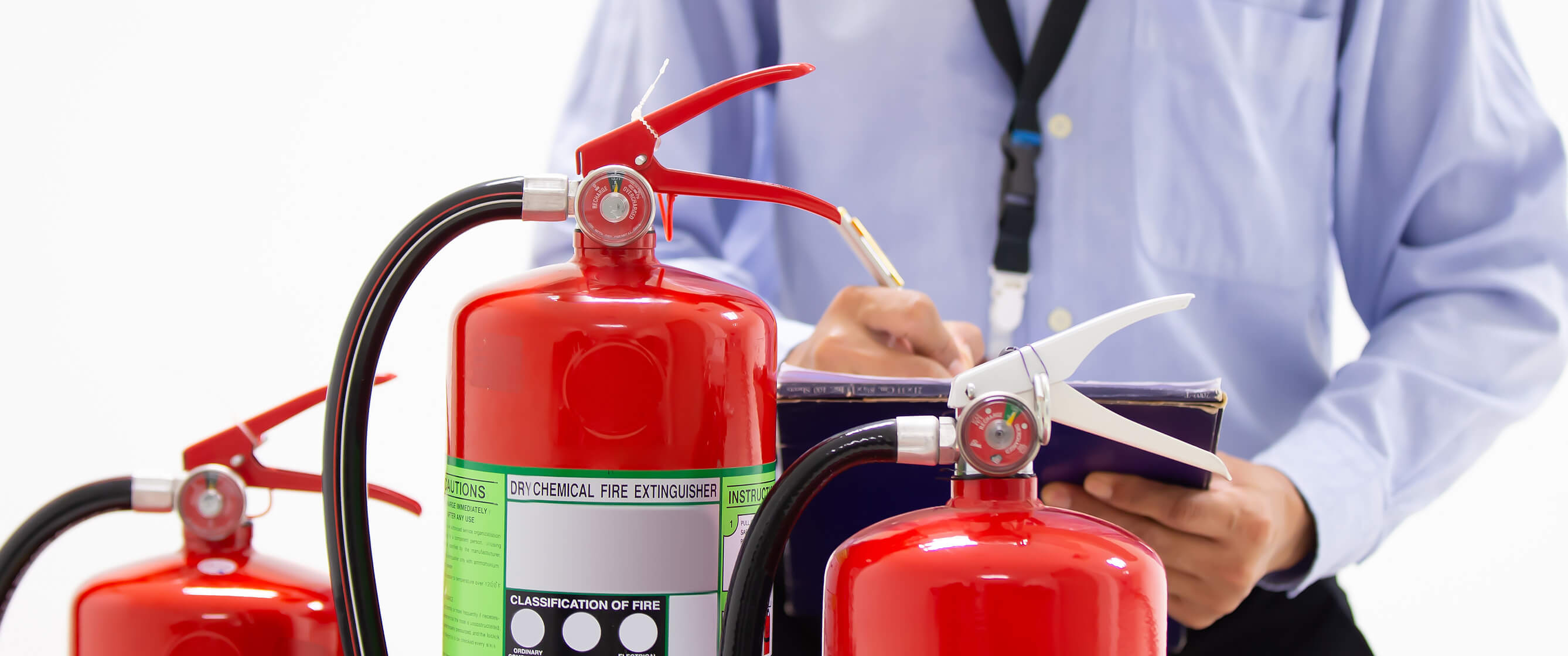
What Does a Fire Extinguisher Inspection Checklist Include?
A complete fire extinguisher inspection checklist covers four categories of checks:
- Visual condition (cylinder damage, tamper seal, safety pin, legible label)
- Pressure and charge (gauge in operational range, correct weight for CO2 units)
- Location and accessibility (in designated location, unobstructed, properly mounted at correct height)
- Documentation (inspection log updated with date, inspector name, and any deficiencies noted).
Monthly checks can be performed by trained staff; annual maintenance must be completed by a certified fire protection technician.
Key Takeaways
- Compliance is the building owner's obligation. Under OSHA 29 CFR 1910.157 and NFPA 10, the responsibility for monthly visual inspections and annual professional maintenance falls on the employer or building owner of record.
- Monthly and annual inspections are not the same thing. Monthly checks are quick visual walkthroughs that trained staff can perform. Annual maintenance is a thorough examination of internal components and must be completed by a certified technician.
- The full maintenance lifecycle extends beyond annual service. Stored-pressure extinguishers require 6-year internal maintenance and 12-year hydrostatic testing.
- Documentation is compliance. Missing records are a violation even when extinguishers are physically sound. A current inspection tag, a complete service history log, and a scheduled professional maintenance program are the three elements that hold up under scrutiny.
Your building has fire extinguishers. But does your team know who checks them, what they are looking for, and where that information is recorded?
A fire extinguisher that has not been properly inspected and documented is a liability to your occupants, your insurer, and your compliance record.
This guide gives building owners and facility managers a practical, organized framework for managing fire extinguisher inspections from monthly walkthroughs to long-term maintenance cycles.
Compliance Is Your Responsibility
Before diving into checklists, it is important to understand who owns the obligation of routine fire extinguisher inspections.
Under OSHA 29 CFR 1910.157, employers are required to conduct monthly visual inspections and annual maintenance checks on all portable fire extinguishers in their workplace.
NFPA 10, the primary national standard for portable fire extinguishers, reinforces those requirements and specifies what each type of inspection must cover.
That means the responsibility sits with you. If an inspector arrives and your extinguishers are out of date, improperly documented, or missing from their designated locations, the violation lands on the building owner or employer of record.
It is also worth understanding that "inspection" and "maintenance" are not the same thing under NFPA 10.
- An inspection is a quick visual check to confirm the extinguisher is in place, undamaged, and ready for use. These can be performed by facility staff.
- Maintenance is a thorough examination of the mechanical components and extinguishing agent, and it must be performed by a qualified technician.
Let’s get into what each inspection type requires, who should perform it, and how to build accountability into the process.
Monthly Fire Extinguisher Inspection Checklist
All of your portable fire extinguishers must undergo a monthly visual inspection to ensure everything is working properly. Here’s what that monthly inspection should entail.
Assess The Visual Condition
Check the exterior of each extinguisher for any visible signs of damage. This includes dents, rust, corrosion, or cracked surfaces on the cylinder. Inspect the hose and nozzle for cracks, blockages, or wear.
Confirm that the tamper seal is intact and unbroken—a broken seal may indicate the unit has been partially discharged, even if the pressure gauge still reads normal. You’ll also want to check that the safety pin is present and has not been pulled.
Verify that the operating instructions label is present, legible, and facing outward. Labels that are missing, faded, or obscured by paint or tape are a citation risk during an AHJ audit.
Check The Pressure and Charge
Check the pressure gauge to confirm it reads within the recommended operational range, which is generally between 185 and 195 PSI for stored-pressure units. A gauge reading below or above the green zone indicates a problem that requires professional attention before the next use.
Note that CO2 extinguishers do not have a pressure gauge. For these units, the monthly check should include verifying weight, since a loss of charge is only detectable by weighing the cylinder against the manufacturer's specified full weight.
Document Location and Accessibility
Confirm that each extinguisher is in its designated, posted location. Inspectors regularly cite fire extinguishers blocked by shelving, office furniture, stacked inventory, or decorative features. If a fire extinguisher cannot be accessed immediately, it is considered non-compliant even if it is properly charged and inspected.
Per NFPA 10, the travel distance to a fire extinguisher in a commercial building should not exceed 75 feet. Confirm that no renovations, new furniture, or changed room configurations have created a compliance gap since the last inspection.
Also, check that the extinguisher is properly mounted on an approved bracket or wall hanger at the correct height. Units weighing 40 pounds or less must be mounted with the top of the unit no higher than five feet from the floor.
Keep Thorough Records
Every monthly inspection must be recorded. At a minimum, your log should include the following:
- Date of the inspection
- Name of the person who performed it
- Extinguisher's location or ID number
- A note on any deficiencies found and the corrective action taken.
This documentation is required under NFPA 10 and is one of the first things an AHJ inspector will request.
Who Performs the Monthly Fire Extinguisher Inspection
Anyone can perform monthly visual inspections. They are quick, basic checks to confirm that devices are fully charged and ready for use.
Companies can designate an employee, facility manager, or safety officer to conduct them. The appointed person needs to know what to look for, how to respond to any issues they find, and how to document the inspection correctly.
For larger facilities with multiple floors or buildings, consider assigning the monthly inspection by zone, with a named individual responsible for each area. This prevents gaps that tend to emerge when inspection responsibility is diffuse.
Annual Fire Extinguisher Inspection Checklist
The annual inspection is a different category of service from the monthly walkthrough, in both scope and who is qualified to perform it.
Employers must perform a full maintenance check on all portable fire extinguishers once per year under OSHA 29 CFR 1910.157(e)(3), and a professional fire protection company should perform this service.
Here’s a snapshot of what they’ll do.
Examine The Visual and Structural Condition
The technician reviews the shell for corrosion or damage, inspects the hose and nozzle for cracks or blockages, and verifies the tamper seal.
While some of these checks overlap with the monthly visual, the annual inspection goes deeper. The technician removes the safety pin and handle to examine components that are not visible during a surface-level walkthrough. Any dents, rust, or structural compromise that could affect the cylinder's integrity under pressure are assessed at this stage as well.
Check The Pressure, Charge, and Internal Components
The technician tests pressure against a calibrated reference and examines all internal components. This is the step that confirms whether an extinguisher will actually discharge correctly in an emergency—something a pressure gauge reading alone cannot guarantee.
For dry chemical extinguishers, the agent is checked for caking or settling that could block discharge. The operating mechanism is tested to confirm it functions as designed.
Ensure Proper Extinguisher Classification
The technician verifies that each unit is the correct type for its location—Class K in the kitchen, ABC in the hallway, Class C near electrical panels.
This is a step many building owners overlook. If equipment has been relocated, areas have been renovated, or operations have changed since the last service visit, there may be mismatches between extinguisher classification and the hazards present.
Documentation and Certification Tag
After inspection, a new tamper seal is installed and the inspection is documented with a signed and dated tag. The tag shows the date, the technician's company name, and their certification number. This tag is your proof of compliance.
If your service provider completes the visit without leaving behind detailed documentation, that is not a complete NFPA 10 inspection. Building owners should confirm that updated records are provided for each extinguisher serviced.
The Long-Term Portable Fire Extinguisher Maintenance Schedule
Most people stop at the annual inspection. However, NFPA 10 establishes a full service lifecycle for fire extinguishers.
6-Year Internal Maintenance
NFPA 10 requires all stored-pressure fire extinguishers to be serviced and recharged every six years. This maintenance must be completed by a certified fire extinguisher service provider.
During this service, the technician:
- Fully discharges the unit
- Disassembles it
- Replaces o-rings and valve stems
- Inspects all internal components for corrosion or deterioration
- Recharges the extinguisher
- Verifies there are no leaks before returning it to service.
They also place a 6-year compliance sticker on the cylinder upon completion.
If an extinguisher reaches its 6-year mark without internal maintenance, it fails inspection and must be removed from service. If you have inherited a building with existing extinguishers and cannot locate documentation of when this service was last performed, check the manufacture date on the bottom of the cylinder or on the label.
12-Year Hydrostatic Testing
Hydrostatic testing involves pressure testing the extinguisher cylinder to verify its strength against rupture and requires special training and equipment.
This test is performed by pressurizing the cylinder with water and confirming it holds the manufacturer's specified pressure for a minimum of 30 seconds. Once it passes, you get a hydrostatic test sticker or metal stamp on the cylinder.
The frequency of hydrostatic testing is determined by fire extinguisher type, ranging from every 5 to 12 years. CO2 and wet chemical extinguishers require testing every five years; stored-pressure dry chemical extinguishers require testing every 12 years.
End-of-Life Considerations
Fire extinguishers do not have a fixed expiration date, but they do reach a point where continued maintenance is no longer practical or cost-effective.
Most manufacturers indicate a well-maintained unit can remain in service for 10 to 12 years on average, with some lasting up to 20 years under proper conditions.
Non-rechargeable extinguishers must be removed from service 12 years from the date of manufacture, regardless of condition. At the 12-year hydrostatic test interval, a qualified technician can advise whether a unit is worth reconditioning or should be replaced.
Keeping a simple spreadsheet with each extinguisher's manufacture date, last 6-year service, and next hydrostatic test due date makes this planning straightforward and keeps you ahead of compliance gaps before an inspector arrives.
Schedule Professional Fire Extinguisher Inspections With Impact Fire
A fire extinguisher inspection checklist is only effective when it is backed by a consistent program—one that assigns responsibility, tracks the full maintenance lifecycle, and ensures professional service happens on schedule.
Impact Fire's licensed technicians provide fire extinguisher inspection, maintenance, and recharge services for commercial and industrial facilities nationwide, with comprehensive inspection and preventative maintenance programs designed to manage your compliance obligations from monthly training through 12-year hydrostatic testing.
Contact Impact Fire to schedule a site assessment or to set up a program that keeps your building covered, documented, and compliant.