What Does Commercial Fire Equipment Maintenance Require?
Maintaining commercial fire protection equipment requires inspection and testing on multiple schedules, depending on the system:
- Fire alarms require monthly visual checks, semi-annual functional testing, and an annual full system test per NFPA 72.
- Fire extinguishers require monthly visual inspections, annual professional service, a 6-year internal examination, and 12-year hydrostatic testing per NFPA 10.
- Fire sprinkler systems require quarterly valve inspections, annual head and alarm testing, and a 5-year internal pipe inspection per NFPA 25.
- Emergency and exit lighting requires a monthly 30-second battery test and an annual 90-minute full-duration test per NFPA 101.
- Fire pumps require weekly churn tests, monthly mechanical inspections, and an annual full-flow performance test.
- Kitchen and special hazard suppression systems require semi-annual inspections per NFPA 96 and NFPA 2001.
Key Takeaways To Maintain Your Fire Protection Equipment
- Fire alarms and smoke detectors: Monthly visual checks are an owner's responsibility, but semi-annual and annual testing require a qualified technician. Any detector falling outside the manufacturer's sensitivity range during the annual inspection must be cleaned or replaced.
- Fire extinguishers: Annual professional service is just the beginning. Track the manufacture date on every unit to stay ahead of the 6-year internal examination and 12-year hydrostatic testing requirements.
- Fire sprinklers: Quarterly, annual, and five-year inspections each target different failure points. Closed control valves are among the most common reasons sprinkler systems fail during a fire. Quarterly checks exist specifically to catch this early.
- Emergency and exit lighting: Compliance comes down to two tests—a monthly 30-second battery check and an annual 90-minute full duration test. Address burned-out lamps immediately and reassess coverage any time the building layout changes.
- Fire pumps: Log every weekly churn test. A pattern of pressure irregularities or delayed starts is an early warning sign that warrants professional attention before it becomes a failure.
- Fire suppression systems: Kitchen suppression inspections must align with hood cleaning frequency. For clean agent systems, enclosure integrity is as important as the agent itself.
Fire protection equipment only works if it is properly maintained.
For building owners, that means understanding which systems you have, what the inspection requirements are, and when a certified professional needs to be involved.
This guide covers the maintenance requirements for every major category of commercial fire equipment to help keep you and your people safe.
Fire Alarm and Smoke Detector Maintenance
A fire alarm system is only effective if every component, from smoke detectors and heat sensors to control panels and notification devices, is functioning as designed.
If you ever need a refresher on what’s required, review NFPA 72. Keep in mind that certain high-occupancy or high-risk environments may require more frequent testing intervals than the NFPA 72 minimums.
Start with the following:
Monthly Visual Inspections
The goal of monthly visual inspections is to confirm that nothing has changed about the physical condition or placement of your equipment.
This means walking the building to verify that:
- Smoke detectors and heat sensors are free of obstructions, dust buildup, and obvious physical damage
- Pull stations are unobstructed and have not been tampered with
- Control panel indicator lights reflect normal system status with no active trouble or fault signals
Addressing small issues at this stage—a detector covered by a ceiling tile, a pull station blocked by new shelving—prevents them from becoming compliance findings during a formal inspection.
Semi-Annual Testing
Every six months, a qualified technician should test smoke detectors, manual pull stations, and notification appliances to verify they are operating within specified parameters.
This includes functionally testing each detector type to confirm it responds to its intended trigger (smoke, heat, or CO) and verifying that pull stations correctly activate the system.
Notification appliances, including horns, strobes, and speakers, are tested to confirm they activate at the correct output levels and that audibility and visibility meet code requirements throughout the building.
Any devices that fail functional testing should be repaired or replaced before the next occupancy cycle.
Annual Full System Test
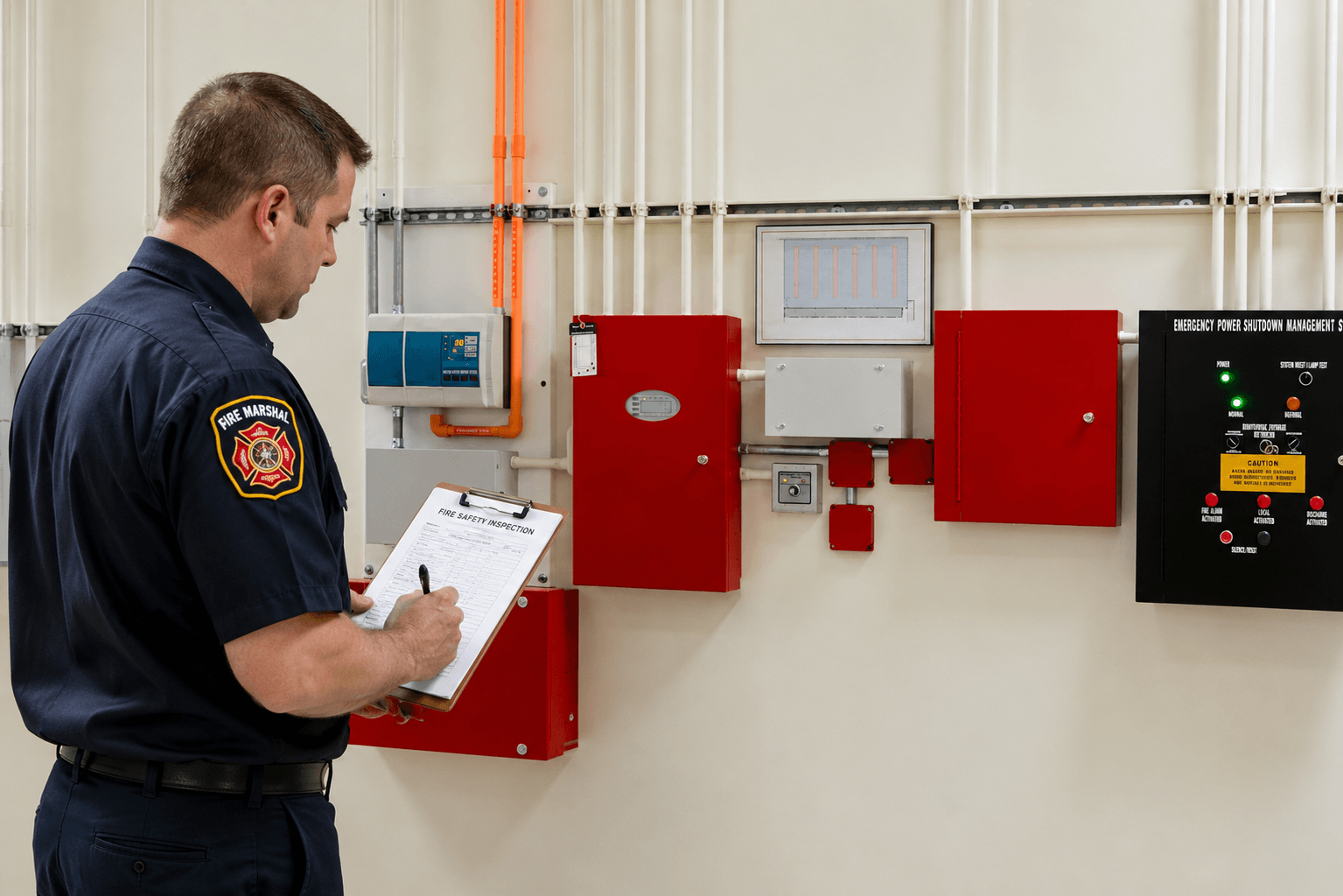
The annual inspection is the most comprehensive and has to be done by a qualified fire alarm technician, with all findings documented in a written record kept on-site and available for review by the authority having jurisdiction (AHJ).
Technicians will test detector sensitivity to confirm every device falls within the manufacturer's listed range. You’ll have to clean or replace any that fall outside of spec.
They’ll also test the control panel to verify that it is communicating correctly across all zones, that supervisory signals are functioning, and that the event log is accurate.
Finally, they’ll assess backup battery condition and capacity to confirm the system can sustain operation during a power outage per NFPA 72 requirements.
For buildings connected to a central station monitoring service, the annual test should also verify that the monitoring connection is active and transmitting correctly.
Fire Extinguisher Maintenance Requirements
NFPA 10 and OSHA 29 CFR 1910.157 establish the inspection and maintenance requirements for fire extinguishers that apply to most commercial buildings.
Here’s where to start:
Monthly Visual Inspections
You don’t need a professional technician for portable fire extinguisher monthly inspections.
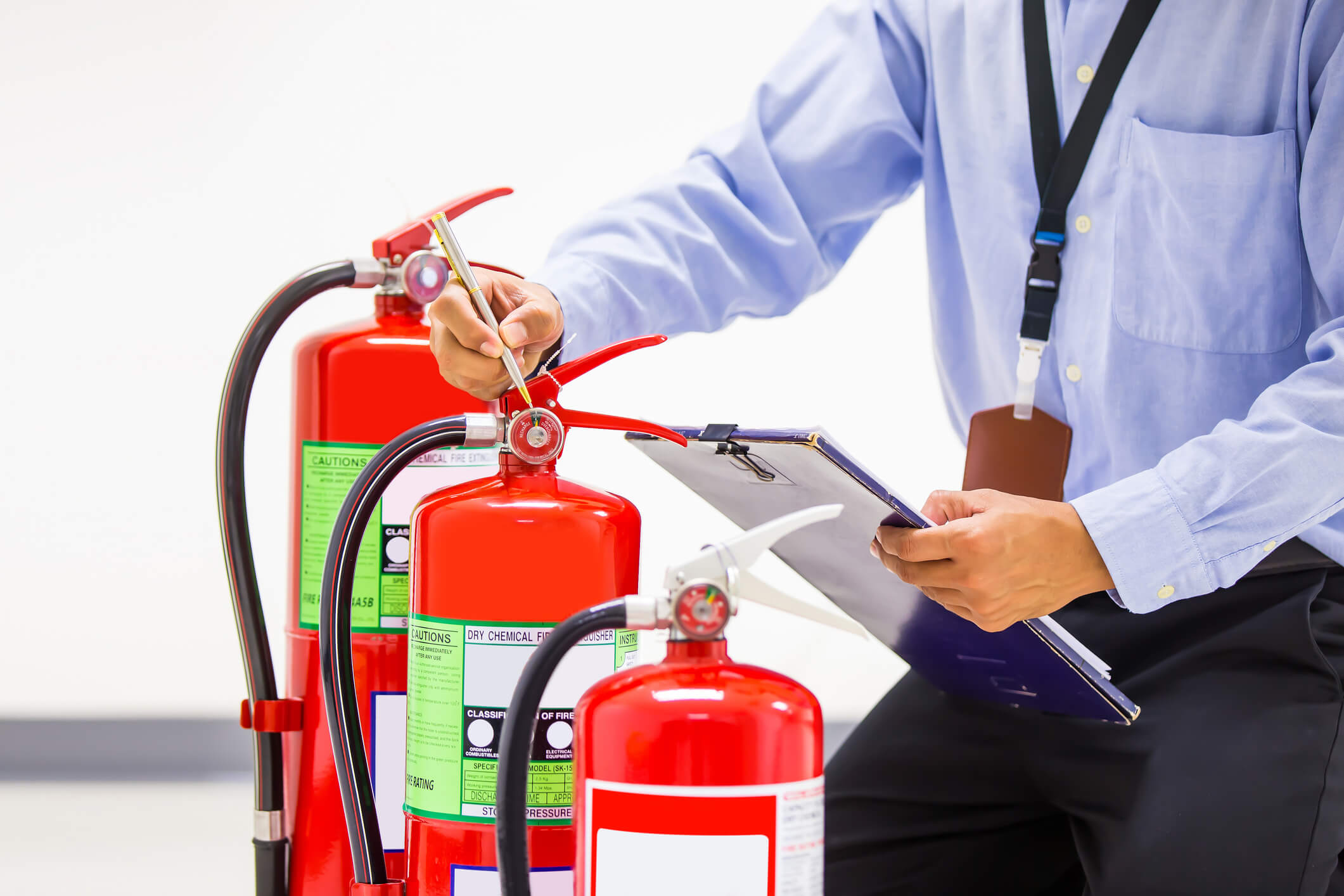
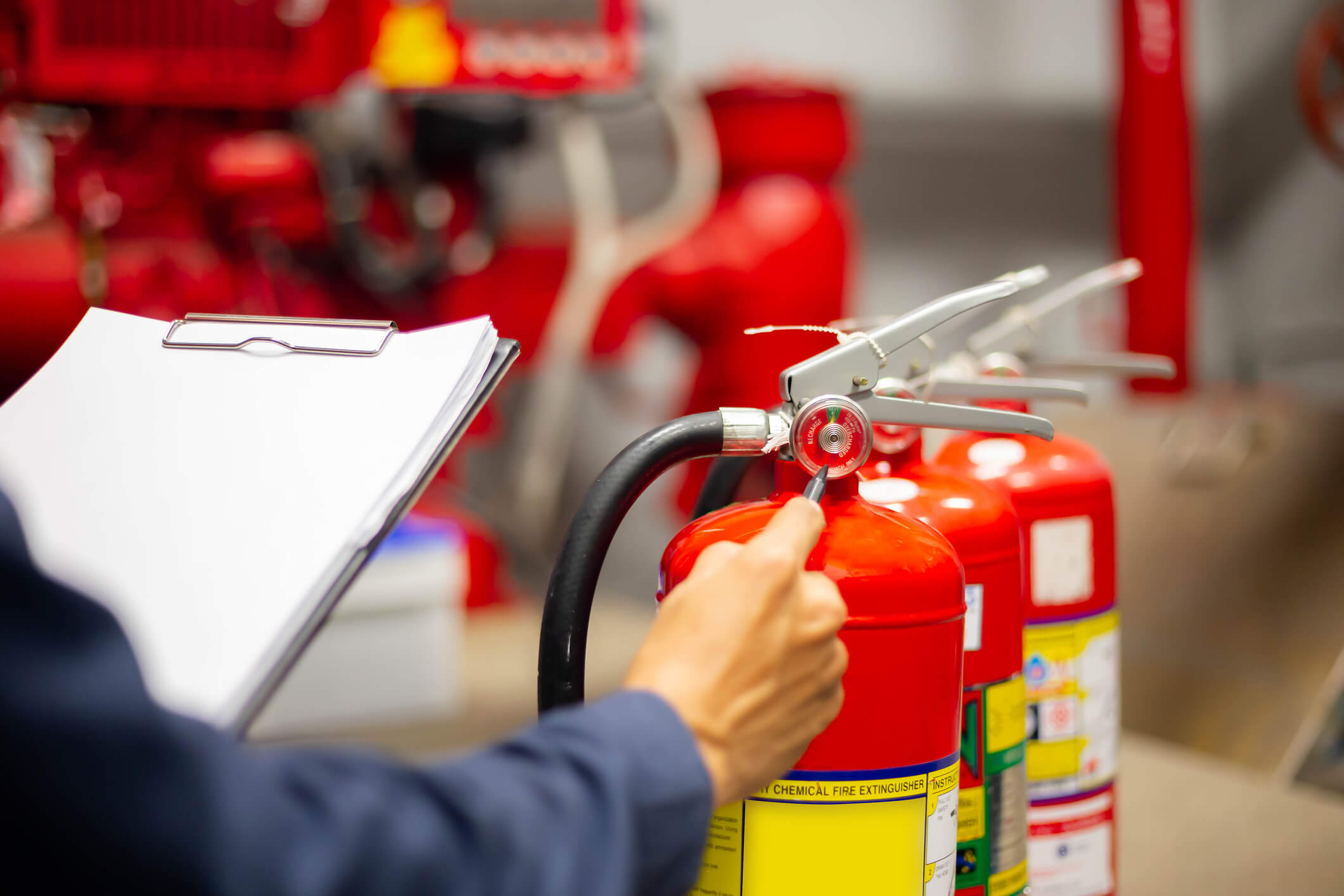
Walk each extinguisher location and confirm the unit is where it should be, unobstructed, and showing no obvious damage or tampering. Check that the pressure gauge needle sits in the operable range, the pull pin and tamper seal are intact, the discharge nozzle is clear, and the label is legible.
Pull any unit that fails this check from service immediately and replace it.
Annual Professional Inspection
Every 12 months, a certified fire protection technician must perform a thorough hands-on inspection of each extinguisher. This goes well beyond what a visual check can capture.
The technician will:
- Verify the weight and pressure of the agent
- Inspect the hose and nozzle assembly for cracks or blockages
- Confirm the pull pin and tamper seal meet current standards
- Check that the extinguisher is the correct type and size for the hazards present in each area of the building
All findings must be recorded on a tag attached to the extinguisher and in a separate service record.
6-Year Internal Examination and Hydrostatic Testing
Stored-pressure extinguishers require an internal examination every six years to inspect the condition of the cylinder interior, valve components, and agent.
At the 12-year mark, hydrostatic testing is required to verify the structural integrity of the cylinder under pressure. Both procedures require the expertise of a certified technician.
Extinguishers that fail hydrostatic testing must be removed from service—they cannot be repaired and returned to use. Building owners should track the manufacturer's date on each unit to stay ahead of these intervals, as an extinguisher that is overdue for either procedure is considered out of compliance regardless of its outward condition.
Fire Sprinkler Maintenance
If all goes well, sprinkler systems operate silently in the background, which makes it easy to assume they are fine. The reality is that corrosion, obstructed heads, closed valves, and pressure irregularities can all develop gradually and go unnoticed without a structured inspection program.
NFPA 25 governs the inspection, testing, and maintenance of water-based fire protection systems and assigns specific requirements at quarterly, annual, and five-year intervals.
Quarterly
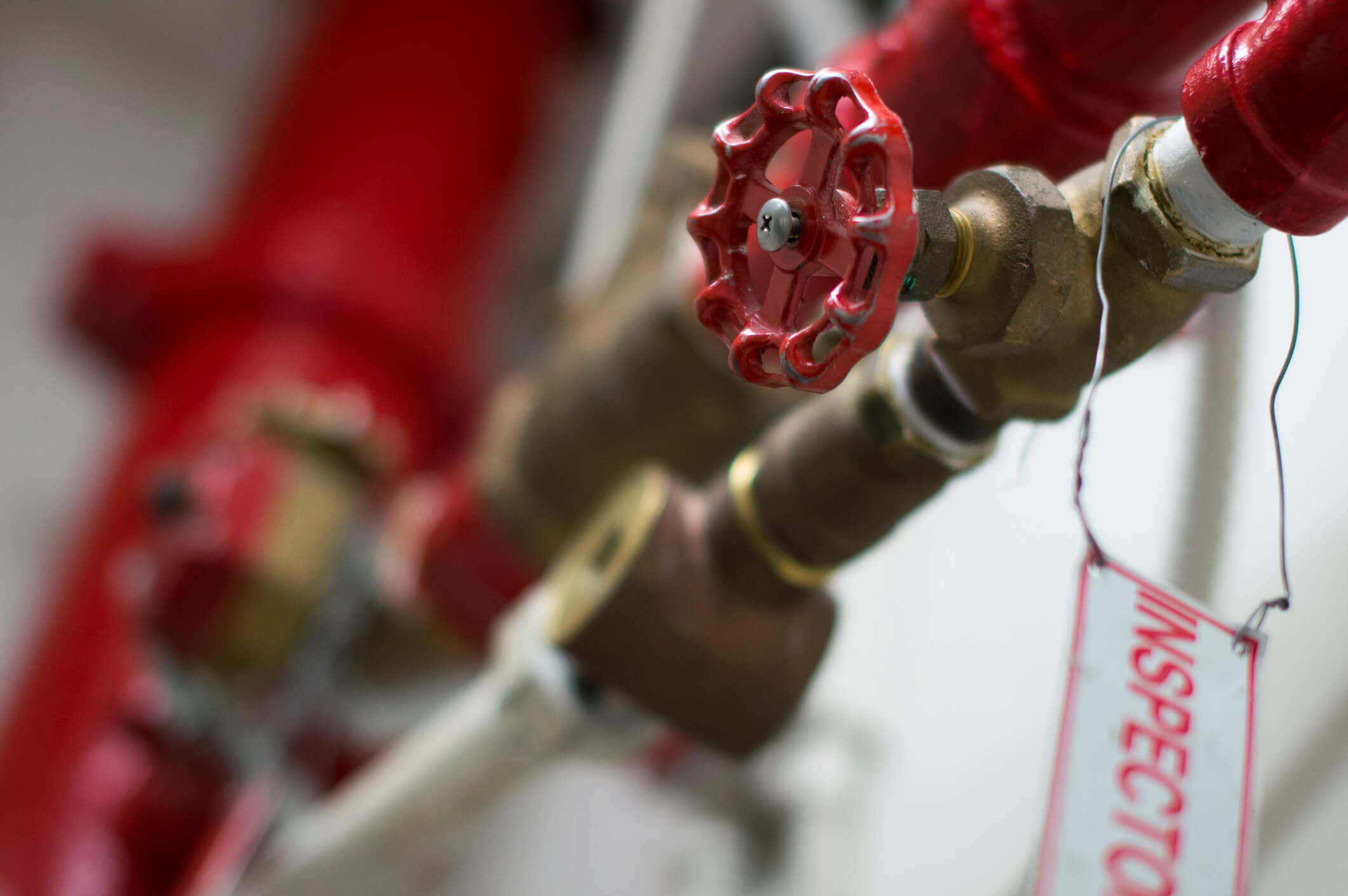
Control valves need to be verified as fully open and properly supervised every 90 days. A closed or partially closed valve is one of the most common reasons sprinkler systems fail to perform during a fire.
Water flow alarm devices should show no signs of leakage, and system gauges on wet pipe systems should be reading within the normal pressure range.
A qualified technician typically does these checks.
Annual
The annual inspection covers the physical condition of sprinkler heads throughout the building.
Heads that are corroded, painted over, loaded with dust or debris, or physically damaged cannot be counted on to activate at the correct temperature. Because of that, you’ll need to replace them instead of just cleaning them.
Technicians will also check pipe hangers and seismic bracing for damage or displacement, confirm that the required spare heads and installation wrench are present in the sprinkler cabinet, and test water flow and supervisory alarms to verify they are activating and transmitting correctly to the monitoring station.
5-Year Internal Inspection
Every five years, NFPA 25 requires an internal inspection of sprinkler piping to check for foreign material, biological growth, or corrosion that could block water flow when the system activates.
Buildings with older piping or a history of water quality issues are particularly susceptible. If the inspection turns up significant obstruction, the system will need to be flushed and the source identified and corrected.
NFPA 25 also requires that sprinkler heads in service for 50 years (25 for fast-response heads) be replaced or submitted for representative sample testing.
Emergency and Exit Light Testing
Emergency and exit lighting guides people out of a building when smoke has reduced visibility, power has failed, and every second of hesitation matters.
NFPA 101 sets the testing requirements, which come down to two straightforward tests and consistent attention to physical condition.
Monthly 30-Second Test
Press the test button on each unit and hold it for 30 seconds. The battery should activate immediately and sustain the light for the full duration. While the unit is illuminated, confirm the light output is visible and unobstructed, the unit has no physical damage, and all exit sign lettering is fully lit with no burned-out lamps or LEDs.
Annual 90-Minute Full Duration Test
Once a year, each unit must be disconnected from its power source and run entirely on battery power for 90 continuous minutes, simulating a real power outage. Units that dim significantly or go out before the 90-minute mark no longer meet code, and the batteries must be replaced.
Document all results and keep records on-site.
Keeping Up Between Tests
Scheduled testing only catches so much. You should replace lamps and LEDs as soon as they burn out rather than waiting for the next inspection cycle.
Building layout changes, such as new walls, additional shelving, and reconfigured corridors can leave gaps in egress lighting coverage that didn't exist when the system was originally installed, and those gaps need to be identified and addressed.
Battery service life in most commercial units runs three to five years, so proactive replacement on that cycle is smarter than waiting for a test failure to flag the problem.
Fire Pump Maintenance
A fire pump is the heart of a building's water-based fire suppression infrastructure. NFPA 25 sets the inspection and testing requirements for fire pumps, and the schedule is more active than most building owners expect.
Weekly No-Flow Test
Every week, building staff or a qualified technician should run the fire pump under no-flow conditions (churn test) to confirm the pump starts automatically and runs without issue.
During this test, record the suction and discharge pressure readings and verify they fall within the expected range for your system. The pump should also run for a minimum of 10 minutes to allow the motor and mechanical components to cycle properly.
Log every weekly test. A pattern of pressure irregularities or delayed starts is an early indicator of a developing mechanical problem that warrants professional attention before it becomes a failure.
Monthly Inspection
Each month, a technician should physically inspect the pump room and all associated components. This means checking the pump casing, shaft seals, and packing glands for leaks, verifying that the controller is in automatic mode and showing no fault indicators, confirming that suction and discharge valves are fully open, and inspecting the coupling between the pump and driver for wear or misalignment.
Diesel-driven pumps require additional monthly attention. Fuel levels, battery condition, and cooling system fluid should all be checked and topped off as needed.
Annual Full-Flow Test
Once a year, a certified technician must conduct a full-flow performance test to verify that the pump delivers its rated capacity at the required pressure. This test runs the pump at its design flow rate and measures performance against the original acceptance test data. Any significant deviation from rated performance, like reduced flow, pressure drop, or overheating signals that the pump needs service or component replacement.
Fire Suppression System Maintenance
Not every fire hazard in a commercial building can be addressed with water. Cooking equipment, electrical rooms, data centers, and industrial processes each present risks that require special hazard suppression systems, governed by NFPA 96 and NFPA 17A.
Kitchen Suppression Systems
Commercial kitchen suppression systems require a semi-annual inspection by a certified technician. During each visit, the technician checks agent cylinder pressure and weight, inspects nozzles for grease buildup or blockage, verifies that fusible links are clean and intact, and confirms that the system's manual pull station and automatic gas shut-off are functioning correctly.
Fusible links are particularly important: grease and heat degrade them over time, and a link that has hardened or deformed will not release the system when it needs to.
The inspection schedule also needs to align with your hood cleaning frequency.
Clean Agent and Special Hazard Systems
Clean agent systems protect spaces where water or dry chemical suppression would cause as much damage as the fire itself. These systems require a semi-annual inspection covering agent container pressure and weight, nozzle condition and placement, detection components, and the integrity of the protected enclosure.
Enclosure integrity matters because clean agent systems work by flooding a space with suppressant. If the room has gaps, unsealed penetrations, or doors that no longer close fully, the agent will dissipate before it can extinguish the fire. A door-fan enclosure integrity test, conducted periodically, confirms the space can hold agent concentration long enough to be effective.
Work With a Fire Protection Partner Who Knows Your Building
Maintaining fire protection equipment is a continuous program that runs on overlapping schedules across multiple systems, each with its own code requirements, documentation obligations, and service intervals.
Partnering with a qualified fire protection company gives you a structured maintenance program, consistent documentation, and technicians who understand how your systems work together.
Contact our fire safety experts to schedule a comprehensive maintenance assessment for your building.