What Should a School Fire Safety Protocol Include?
A complete school fire safety protocol assigns specific staff roles for evacuation and accountability, follows NFPA 101's drill frequency requirements for educational occupancies, keeps alarm, sprinkler, and extinguisher systems on a documented maintenance schedule, and maintains centralized records of drills, inspections, and training for compliance review.Key Takeaways
- NFPA 101 holds educational occupancies to a stricter fire drill frequency than standard commercial buildings, and many jurisdictions expect monthly drills during the school year.
- USFA data shows nonresidential fire deaths rose 70 percent over the past decade even as fire counts held steady, meaning preparedness increasingly determines outcomes.
- A written protocol only works if staff know their specific role, floor warden, accountability lead, evacuation route, before an alarm sounds.
- Centralized documentation of drills, inspections, and training turns a surprise fire marshal visit into a formality instead of a scramble.
A fire alarm sounds during passing period, hallways full, and the facilities team has seconds to know whether staff and students will move calmly toward an exit or freeze waiting for direction. For a facilities director managing fire safety across one campus or a dozen, that gap between a written policy and a rehearsed response is where real risk lives. This guide lays out a protocol built for that gap.
The State of School Fire Risk
School fires are far less common than they were a generation ago, largely because sprinkler retrofits, stricter building codes, and better alarm technology have changed how fast a small fire gets caught. That does not mean the risk has disappeared, and it does not mean training can be treated as a formality.
Nationally, the U.S. Fire Administration's most recent estimates show nonresidential buildings, a category that includes schools, experienced 110,000 fires in 2023, resulting in 130 deaths, 1,200 injuries, and just over $3.16 billion in direct property loss. Over the prior ten-year period, nonresidential fire deaths increased 70 percent, even as the number of fires held relatively steady. That trend matters for facilities directors because it suggests outcomes are increasingly determined by preparedness and response time rather than by whether a fire starts in the first place.
School buildings carry particular characteristics that shape this risk. Historically, a large share of school fires have been linked to intentional fire-setting, most often originating in lavatories or locker rooms, with cooking equipment and electrical malfunctions as other leading causes. High occupancy during school hours, unsupervised spaces, and aging electrical infrastructure in older buildings all factor into where a facilities director should focus prevention efforts. None of that is a reason for alarm. It is a reason to have a protocol that assumes a fire could start and is built around minimizing its consequences.
Building The Protocol: Staff Roles and Evacuation Procedure
A fire safety protocol only works if the people executing it know their specific job before the alarm sounds. This starts with a written plan that assigns roles rather than relying on general instructions to "evacuate calmly."
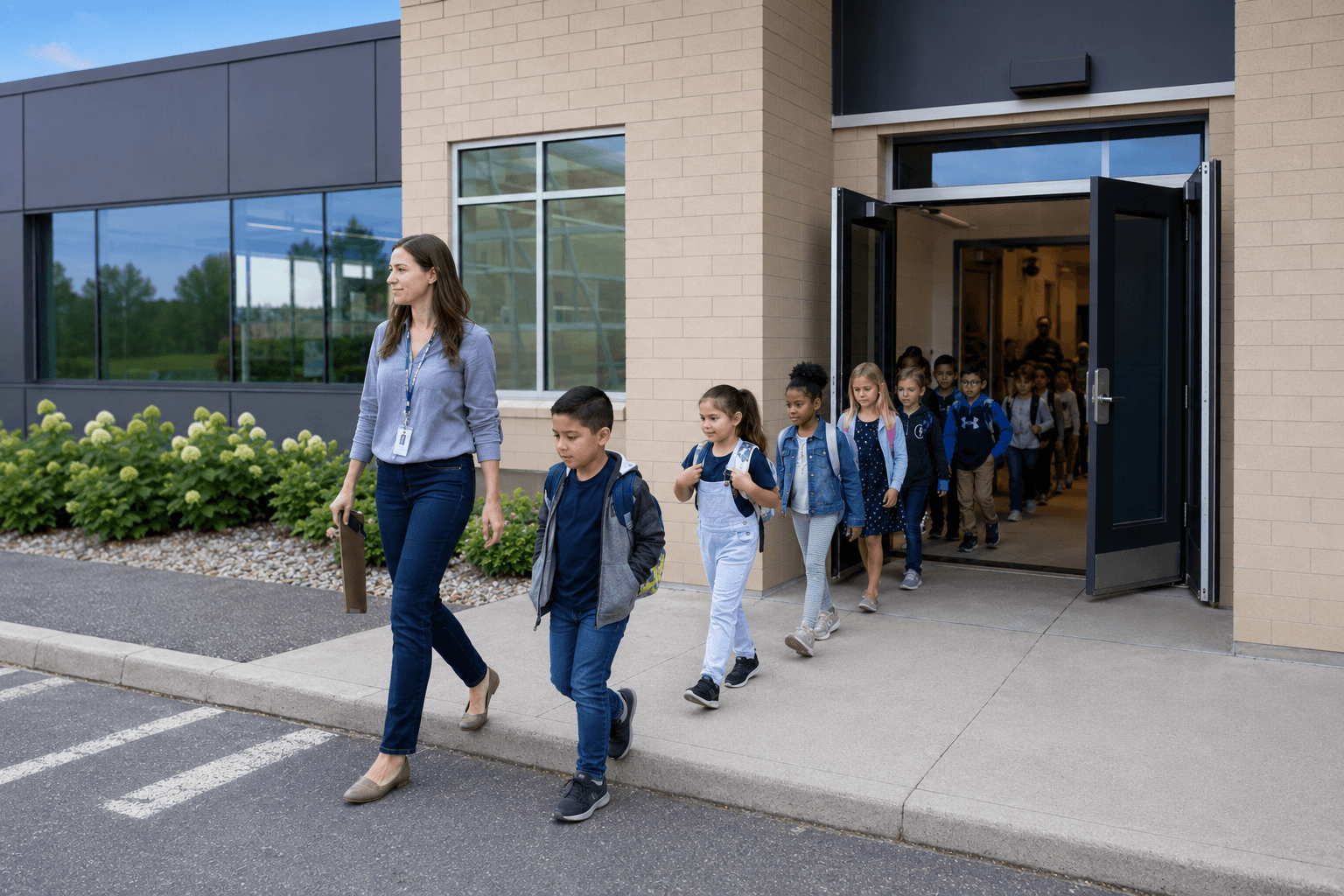
At minimum, a school's protocol should designate a primary person responsible for triggering the evacuation and confirming the fire department has been notified, floor or wing wardens responsible for sweeping classrooms and restrooms along their route, and a designated accountability point where staff take attendance against class rosters once outside. Substitute teachers and new hires need this information on day one, not buried in an employee handbook they will read later.
Evacuation routes should be posted in every classroom, and staff should walk them, not just read them, at the start of each school year. Facilities directors overseeing multiple buildings often find that route confusion, not the fire itself, causes the most delay during an actual event. A locked exterior door, a hallway used for storage, or a rarely used stairwell can all undermine a plan that looks sound on paper.
Much of this protocol structure mirrors what any commercial facility should have in place, starting with a fire hazard assessment to identify unique risks before finalizing roles and routes. For schools specifically, the added layer is age-appropriate communication. A protocol that works for high school staff needs to be adapted in tone and pacing for elementary classrooms, where clear, calm adult direction matters more than independent decision-making.
Drill Cadence and NFPA 101 Compliance
Most commercial occupancies are required to conduct fire drills at least once every six months, but educational occupancies are held to a stricter standard. NFPA 101, the Life Safety Code, treats schools as a high-frequency drill environment specifically because occupant turnover and age variability make regular rehearsal more important than in a typical office setting. Many jurisdictions interpret this to mean monthly drills during the academic year, though facilities directors should confirm the exact requirement with their local authority having jurisdiction, since some states layer additional mandates on top of the base code.
The code language itself sets the bar simply: drills need to happen often enough that evacuation becomes routine rather than novel.
A drill that only tests whether people can exit the building quickly is missing half the value. Facilities directors get more out of each drill by rotating the scenario. Block a stairwell to see how staff reroute. Run a drill during a lunch period instead of a passing period to see how a less structured moment affects response time. Vary which exit is treated as unavailable so staff do not default to a single memorized path.
Documentation should happen immediately after each drill, while details are fresh. Note the time from alarm activation to full evacuation, any bottlenecks at doors or stairwells, and any staff or students who were unclear on their role. That kind of record is also the backbone of planning and running an effective fire drill year over year, and it translates directly to a school setting with minor adjustments for student age groups.
Equipment Readiness: Alarms, Extinguishers, Sprinklers
A well-rehearsed evacuation plan is only as good as the systems that trigger it. Facilities directors are often juggling equipment across multiple buildings with different ages, vendors, and inspection histories, which makes a consistent maintenance calendar essential rather than optional.
Fire alarm systems in most educational occupancies are required to be monitored, meaning a signal is transmitted automatically to a central station or directly to emergency services rather than relying on someone in the building to place a call. This distinction matters most outside of school hours, when evening events, sports practices, or maintenance work leave a smaller number of people on campus.
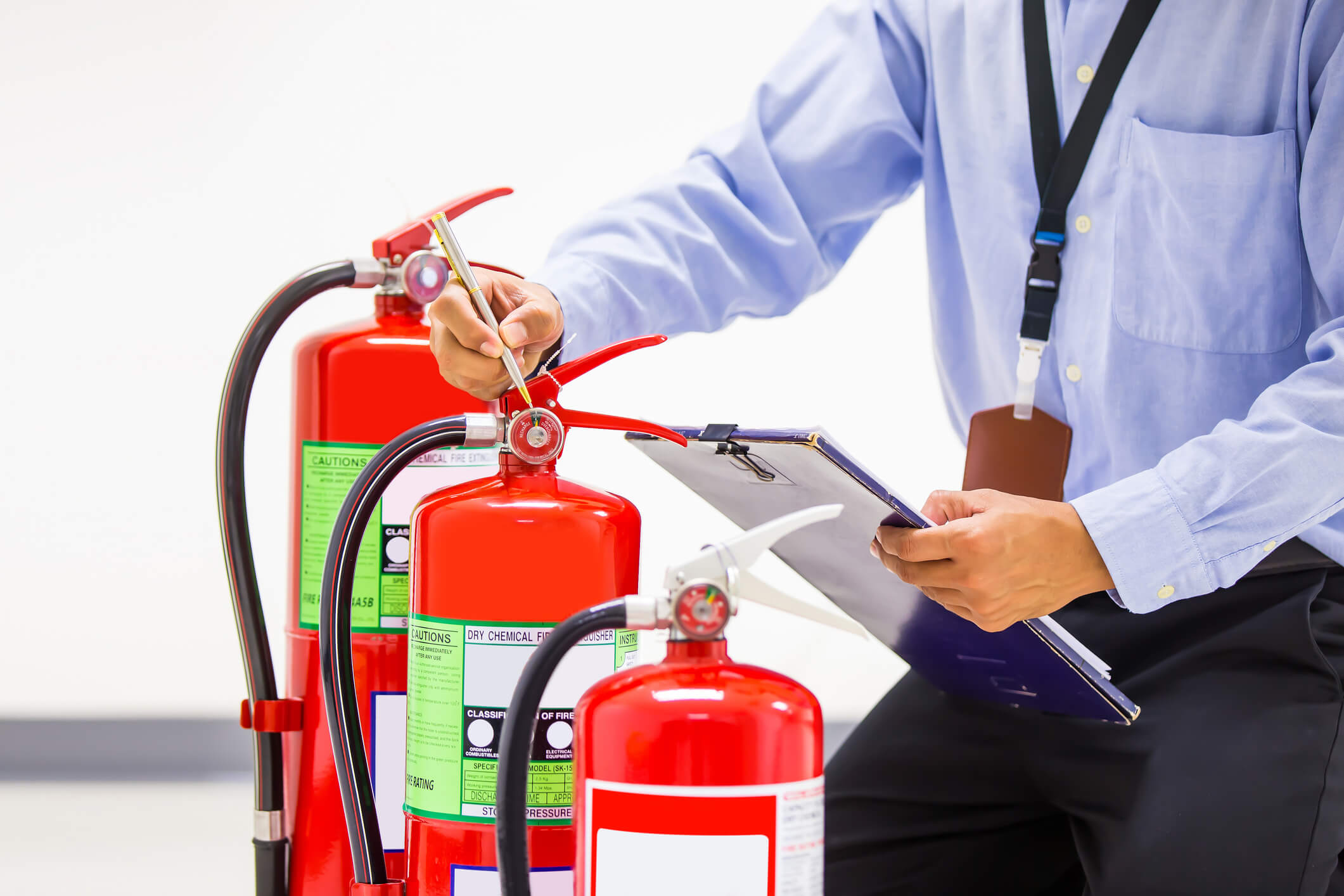
Beyond alarms, sprinkler systems require regular inspection, testing, and maintenance on a defined schedule, and any confirmed or suspected impairment needs to be addressed immediately rather than logged for a future service visit. Fire extinguishers need monthly visual inspections and an annual maintenance check performed by a qualified technician, per OSHA's portable fire extinguisher standard, and staff should be trained annually in their use if extinguishers are accessible to them, a requirement that applies to school staff the same way it applies to any commercial employer.
Older buildings deserve particular attention here. Electrical failures and malfunctions are a recurring contributing factor in school fires, and aging infrastructure in older campuses raises that risk further. A facilities director managing legacy buildings should treat electrical system review as part of the same annual cycle as alarm and sprinkler inspection, not a separate concern addressed only when something fails.
Documentation, Audits, and Working with Your AHJ
Fire and life safety compliance in schools is not just about having the right equipment and training in place. It is about being able to prove it, on demand, to a fire marshal, an insurance auditor, or a school board asking for an update.
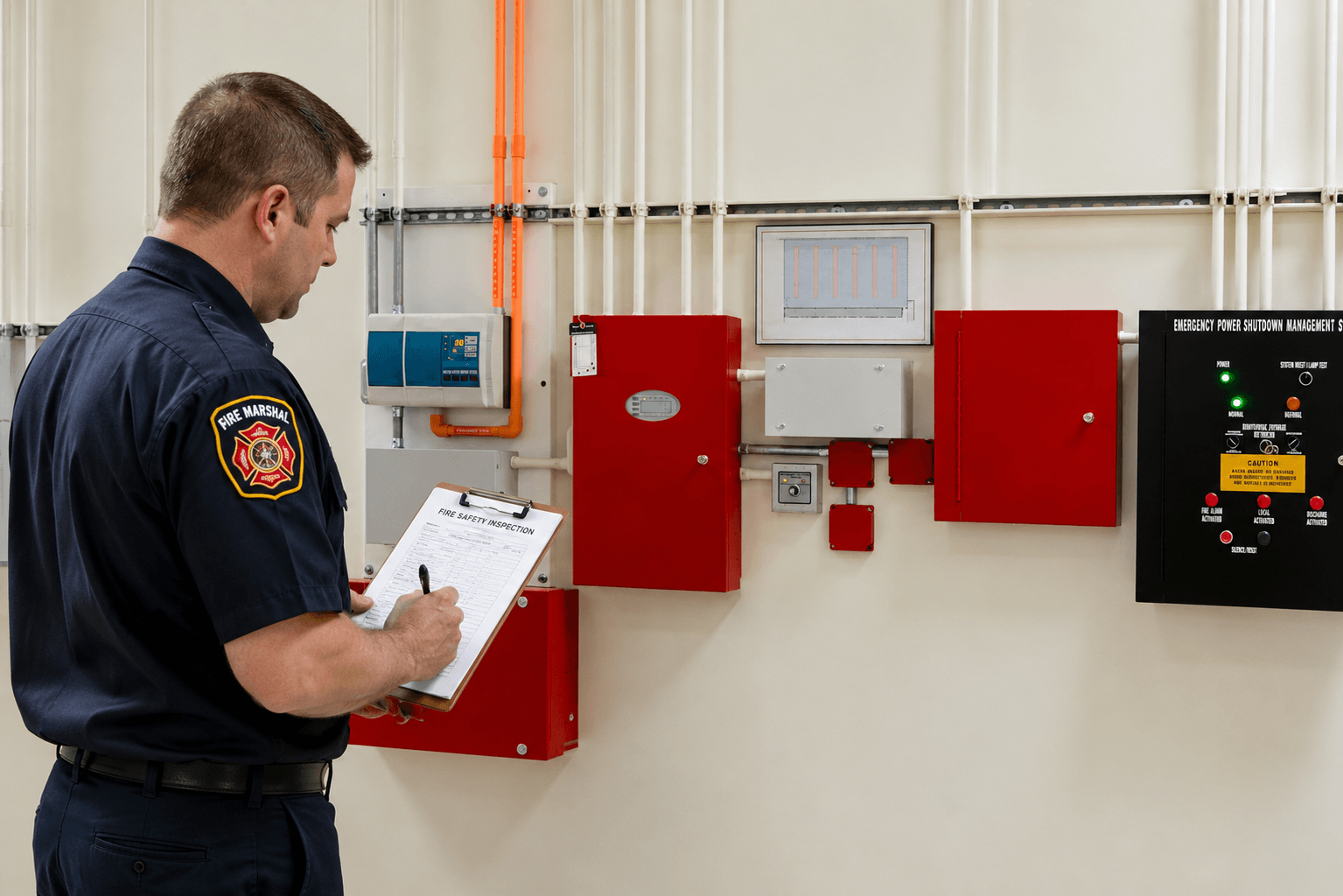
A facilities director should maintain a centralized record that includes drill logs with dates, times, and evacuation duration, inspection and maintenance records for alarms, sprinklers, and extinguishers, staff training completion records, and any correspondence with the local AHJ regarding code interpretation or approved variances. When these records live in one place, an unannounced inspection becomes a formality instead of a scramble.
Building a working relationship with the local fire marshal's office pays off well before an inspection happens. Marshals who are familiar with a school's layout, its history of drills, and its point of contact tend to flag concerns early and informally rather than issuing violations that could have been avoided with a five-minute conversation. Inviting local fire officials to observe an occasional drill, or consulting them when planning a new drill scenario, builds that familiarity naturally.
Facilities directors juggling systems across multiple buildings often find it useful to see how the major fire codes connect to one another, from alarms to sprinklers to extinguishers, so compliance reads as one coordinated system rather than a checklist of separate vendors and separate deadlines.
Fire Safety Training That Holds Up When it Matters
School fire risk has changed shape over the decades, but it has not disappeared, and outcomes now hinge more on preparedness than on chance. A clear evacuation protocol, a drill schedule aligned with NFPA 101, well-maintained alarm and suppression equipment, and organized documentation together form a system that protects students, staff, and the institution's liability position. Facilities directors managing this across multiple buildings do not need to build it alone. Contact the fire safety experts at Impact Fire to align your school's training, inspections, and compliance recordkeeping into one coordinated plan.